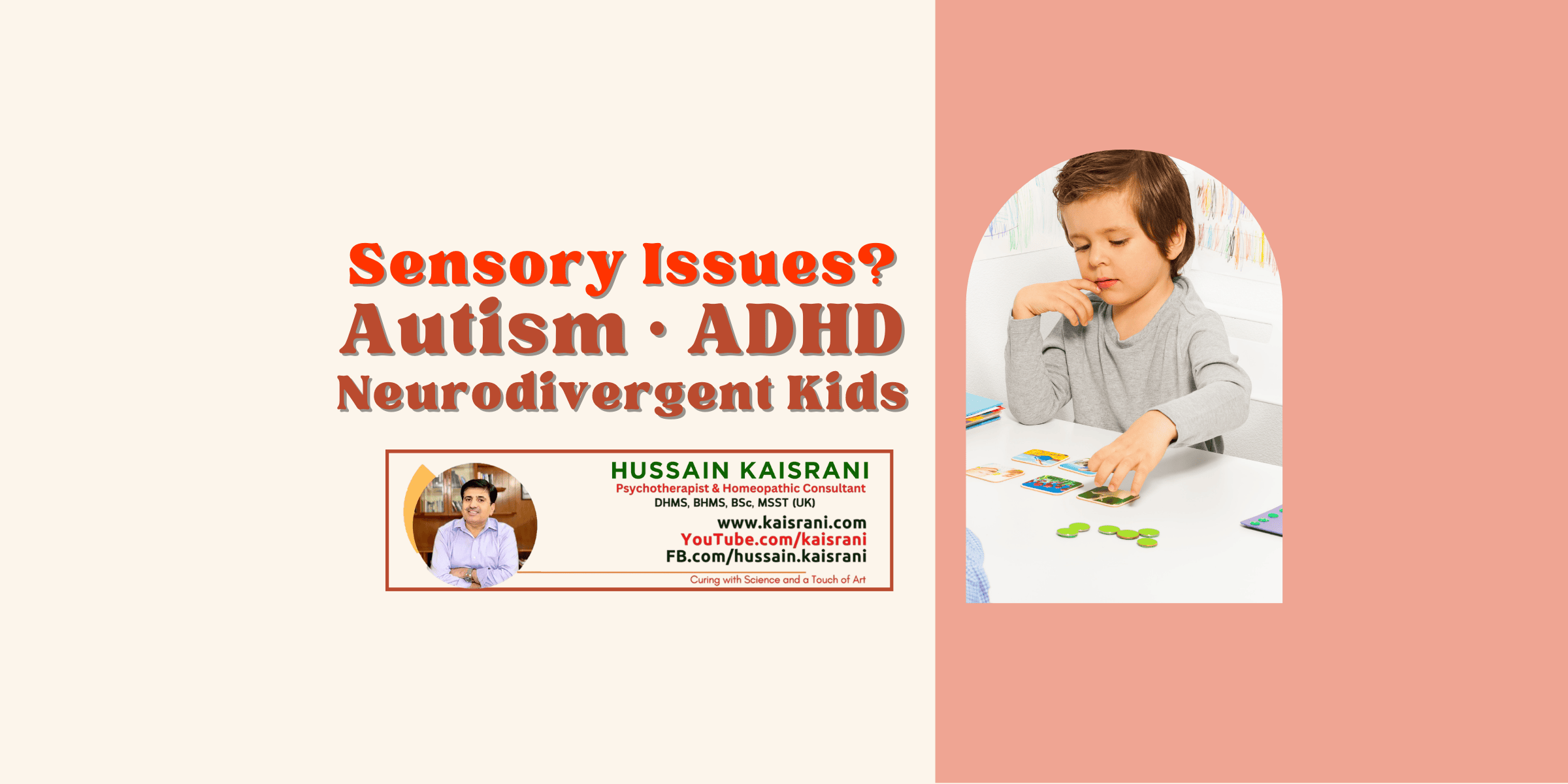
Many autistic, ADHD, ODD and other neurodivergent children experience strong sensory sensitivities. Sensory processing can feel overwhelming for them and everyday sights, sounds, smells, tastes and textures may be much harder to manage. Understanding these challenges helps parents support their child with more confidence and calm.
Sight (Vision) Sensitivities
Some children cannot look at bright lights or flashing objects. Others may feel scared in the dark. Moving objects can be very distracting; something as simple as watching a fan can draw all their attention and make it difficult for them to focus on anything else.
Smell Sensitivities
Strong smells that others barely notice may be too much for some children. They might react strongly to certain scents, or sometimes sniff objects like pencils, clothes or toys because it helps them feel more secure or understand their environment better.
Taste and Food Texture Sensitivities
Food is a big sensory challenge for many neurodivergent children.
Common examples include:
- Refusing soft, slimy or sticky food
- Eating only crunchy or crisp food
- Avoiding crunchy food and preferring everything blended or smooth
These behaviours are not about being “picky”; they are real sensory preferences shaped by how their brain processes texture and taste.
Hearing (Noise) Sensitivities
Noise sensitivity is one of the most common sensory challenges. Everyday sounds may feel painfully loud.
Children may cover their ears because sounds like:
- Pressure cooker whistles
- Sudden bangs
- Loudspeakers
- Household noise
…feel too intense or frightening. This is a genuine sensory overload, not misbehaviour.
Touch (Skin) Sensitivities
Some children cannot tolerate certain fabrics or clothing textures.
Parents often say:
“They want to wear the same T-shirt every day.”
This happens because that specific piece of clothing feels comfortable and predictable. New textures may feel scratchy, tight or overwhelming.
Why Sensory Issues Happen
Neurodivergent children often process sensory information differently. What feels normal to one person may feel too loud, too bright, too rough or too intense to another. These differences are part of their unique neurodivergent profile.
Understanding and supporting sensory needs can reduce stress for the whole family and help your child feel safer and more comfortable.
AutismAwareness #ADHD #Neurodivergent #ParentingTips #SensoryIssues