A Message for Mental Health Day: Healing from the Core
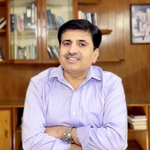
Dr. Hussain Kaisrani
DHMS, BHMS, BSc, MS (UK) – Integrative Psychotherapist & Homeopathic Physician
On this Mental Health Day, I wish to share my perspective with you; woven from my roles as a homeopathic doctor, a psychotherapist, an individual who has witnessed deep struggle and a dedicated meditator.
First, I extend my heartfelt acknowledgement and congratulations to my patients, friends and students. Many of you have walked through the shadowed valleys of Generalised Anxiety Disorder (GAD), Major Depressive Disorder (MDD), Panic Attack Disorder, Obsessive-Compulsive Disorder (OCD), Attention-Deficit/Hyperactivity Disorder (ADHD), Autism Spectrum Disorder (ASD), Oppositional Defiant Disorder (ODD) and the broad experience of being Neurodivergent. You have not only found successful treatment but, more importantly, you have gained the knowledge and resilience to navigate your mental landscape and guard against relapse.
Yet, I know that within this same community, many are on a painfully rough journey. Some are on the verge of giving up hope and others feel their journey is ending. This profound struggle often stems not from a single external catastrophe – not solely from bereavement, financial ruin or personal disappointment but from a deeper, more silent crisis: your spirit has given up. Your emotional and mental resilience has reached its limit.
You drag through days and endless nights, wearing a “mask of happiness” for the world while internally shaking with unspoken pain, calling for help that seems unheard. So you are in an internal ocean of emotion-navigating divorce, heartbreak, grief, loss of a parent or partner, business failure or financial collapse. This gradual internal decay, this surrender of hope, is the toughest part of the human experience.
The Critical Juncture: When Should You Seek Help?
In many societies, particularly within the subcontinent, mental health remains a taboo. The societal mantra, “How can you be weak?” silences suffering. But we must ask: Why can you not be weak? Acknowledging your pain is the first step to strength.
From my integrated perspective, let us understand the mind. Psychologists posit the division into the conscious and the subconscious mind. The subconscious, constituting over 90% of our mental activity, stores everything silently. When it becomes overloaded with unresolved negativity, worry and unaccepted realities, pressure builds. This is the genesis of mental distress, which often follows a critical progression:
1. The First Alarm: Generalised Anxiety Disorder (GAD)
This is a state of constant restlessness, unwarranted fear and worry over minor things. Imagine a pressure cooker on the stove – the heat is on, pressure builds but there is no whistle yet. This is the prime, non-negotiable time to seek help. Look inward: What is wrong? Why this constant fear?
2. The Second Alarm: The Phase of Anticipation
This is a pervasive fear that “something bad is going to happen” before any event. It is the pre-whistle tension in the pressure cooker. The alarm is louder. You must engage in self-inquiry, talk to trusted family or seek professional guidance.
3. The Whistle: Panic Attack Disorder
This is the explosive release. The subconscious mind, full to capacity, demands an outlet. Characterised by sudden, intense episodes of fear mimicking life-threatening crises – heart palpitations, terror a feeling of impending doom – it severely hampers quality of life and erodes confidence. Ignoring this stage risks progression to major psychiatric conditions.
The Homeopathic & Integrative Role in Healing
Homeopathy does not merely suppress symptoms. It seeks to work at your core. As a homeopathic doctor, my approach is to find the unique, individualised remedy that resonates with your entire mental, emotional and physical state – your essential self.
Homeopathic constitutional treatment aims to gently restore balance from within, building resilience rather than offering temporary relief. It is complemented by psychotherapeutic techniques to reframe thoughts and process emotions. The goal is lasting change.
A Brief Insight into Homeopathic Remedies
Note: These are examples of commonly considered remedies. Prescription must always be individualised by a qualified homeopath.
- For Anxiety & Panic: Aconitum napellus (sudden terror, panic after shock), Argentum nitricum (anticipatory anxiety with impulsivity), Gelsemium (weakness and trembling before an ordeal).
- For Depression: Natrum muriaticum (grief-held sadness, aversion to consolation), Aurum metallicum (deep despair with self-reproach), Sepia (indifference and withdrawal).
- For OCD & Repetitive Thoughts: Medorrhinum (hurried obsessions, checking rituals), Syphilinum (compulsive washing, fear of contamination).
How to Help Yourself: Practical Steps
When the alarm has sounded, what can you do?
- Talk. Seek Connection.
Confide in someone who will not laugh but will listen with empathy and offer guidance – a friend, parent, spouse or a professional counsellor. - Express. Don’t Suppress.
رونا آتا ہے؟ (Do you feel like crying?) Weep. Weep profoundly.
آپ چاہے مرد ہو یا عورت، لڑکی ہو یا لڑکا، جب رونا آئے تو خوب روئیں۔
(Whether you are a man or a woman, a girl or a boy, when you need to cry, cry fully.)
Weeping is not weakness; it is emotional ventilation, a sign of strength. Consider journaling as another form of release. - Anchor in the Present.
During anxiety or panic, consciously ground yourself in the current moment. Halt the cycle of self-critical analysis and catastrophic future-tripping. - Meditate.
Cultivate a practice to observe your thoughts without being engulfed by them. - Accept Professional Help.
Whether you choose allopathy, homeopathy or integrative counselling, seek expert help. Accepting your situation is the start of changing it.
The Ultimate Perspective: Finding Meaning in the Struggle
In my journey, I found an insight in Dr. Brian L. Weiss’s book, Many Lives, Many Masters. It teaches that our challenges, good or bad, arrive to strengthen us and impart crucial life lessons. If we do not learn – if we do not balance our inherent worry, sorrow or anger – similar situations will recur.
Therefore, when stress arises, ask this dual-question diagnostic:
- Is this stress environmental? Is something externally wrong that I must voice or change?
- Or is this stress internal? Is there an imbalance within me – an attitude, a fear phobia, a hurt – that I must work to heal and balance?
This simple technique empowers you to face situations with clarity and bravery.
Final Words
To anyone feeling lost, sad or profoundly disappointed: pause and ask yourself the most fundamental question.
Why did you take birth? Know that reason.
Your unique purpose is the compass that will guide you to the next level, through the storm and back into the light.
Do not give up on your mental health. With the right help – whether homeopathic, psychological or spiritual – you can emerge not as a loser, but as a warrior, an inspiration, shining with hard-won strength.
About Dr. Hussain Kaisrani
Dr. Hussain Kaisrani is an Integrative Psychotherapist and Homeopathic Physician with extensive qualifications, including a Master of Science from the UK. His practice is dedicated to treating complex mental and emotional conditions by addressing the root constitutional imbalance of the individual. Blending classical homeopathy with modern psychotherapeutic understanding, he offers a holistic, patient-centred path to sustainable mental wellness.
For consultation and resources:
Website: www.kaisrani.com
YouTube: youtube.com/kaisrani
Disclaimer: This article is for educational purposes. Homeopathic medicines must be prescribed by a qualified practitioner. In a crisis, please contact emergency services.