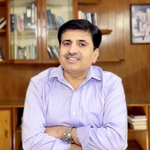
I am Dr. Hussain Kaisrani. I am a psychotherapist and a consultant in classical homeopathy. I have been practicing for more than two decades, with a consistent focus on understanding human behaviour, emotional patterns, and holistic well-being. My work centres on classical homeopathy, detailed case-taking, and helping individuals through a comprehensive, person-centred approach.
The topic of this lecture is immunity and how it is viewed from a holistic and homeopathic perspective.
The year 2020 was a turning point for many people. During the global crisis, one aspect of health received more attention than ever before: immunity. Before that, discussions around health often revolved around blood pressure, thyroid, cholesterol, diabetes and similar concerns. Immunity, however, remained a relatively neglected topic.
Now, the idea of immunity has become part of mainstream conversation. To understand this more clearly, it is important to ask: What exactly is immunity? How does the body’s natural defence work? And how is it understood in holistic or traditional homeopathic practice?
Understanding Immunity
Immunity can be described as the body’s natural defence mechanism. It plays a role in how a person responds to daily challenges, environmental exposures and internal changes. Human beings have lived for thousands of years, long before modern medical systems emerged. The fact that humanity survived and adapted over time suggests that the body possesses an inherent system of internal regulation and protection.
This internal ability varies from person to person. Some individuals respond strongly to minor challenges, while others remain steady even under significant stress. These differences highlight the individuality of the human system.
Types of Internal Responses
Balanced Response
A balanced response supports stability, resilience and recovery in everyday life.
Overactive Response
In some situations, the body’s reactions may be stronger than necessary. This heightened response can contribute to discomfort or a sense of overwhelm.
Underactive Response
There are also situations where the body’s natural response appears low or insufficient. Individuals may feel fatigued, slow to recover or generally low in vitality.
Holistic approaches emphasise understanding why these differences exist and how balance can be supported over time.
Homeopathic and Holistic Perspective
Classical homeopathy is traditionally practiced as an individualized and holistic system. It does not limit its understanding to symptom names or disease labels. Instead, it examines the person as a complete unit — mind, emotions, tendencies, physical patterns, behaviour, family history, stress responses and overall temperament.
The key principle is that no two individuals are the same. Therefore, homeopathic practitioners focus on:
- Temperament and personality
- Emotional and psychological responses
- Genetic influences
- Behavioural tendencies
- Lifestyle and environmental factors
- Personal history and patterns
This detailed evaluation forms the basis of individualized case-taking. The goal is not to match a medicine to a disease name, but to understand the person as a whole.
Vitamins, Diet and Lifestyle
Many people ask whether vitamins or certain foods can increase immunity. Nutritional support and vitamins can assist when deficiencies are present, but long-term balance also involves emotional health, stress management, lifestyle habits and internal patterns.
From a holistic viewpoint, true well-being depends on the combined effect of physical, emotional and psychological factors. Classical homeopathic practice aims to understand these factors rather than focus solely on physical symptoms.
Conclusion
Immunity is not limited to a biological concept. It reflects the entire pattern of how a person responds to life. The holistic and homeopathic perspective gives importance to individuality, mind-body connection and overall balance rather than isolated symptoms.
About the Author
Dr. Hussain Kaisrani DHMS, BHMS, BSc, MS (UK)
Dr. Hussain Kaisrani is a psychotherapist and classical homeopathic consultant with more than twenty years of professional experience. He is known for his detailed case-taking, person-centred approach and emphasis on understanding emotional and behavioural patterns. His work integrates psychological insight with classical homeopathic principles to support individuals and families holistically.